I Almost Talked Myself Out of the Best Thing I've Ever Built
And if you've ever stood at the edge of something you created — something that actually worked — and still found a way to convince yourself you couldn't do it again, this one's for you.
There's a specific kind of self-doubt that doesn't show up when you're starting something new.
It shows up after you've already proven yourself.
After the event went well. After the launch landed. After the membership filled and the testimonials came in and all the evidence was sitting right there in front of you, saying: you did this. You're capable. You can absolutely do it again.
And you still find a way to whisper: but can I though?
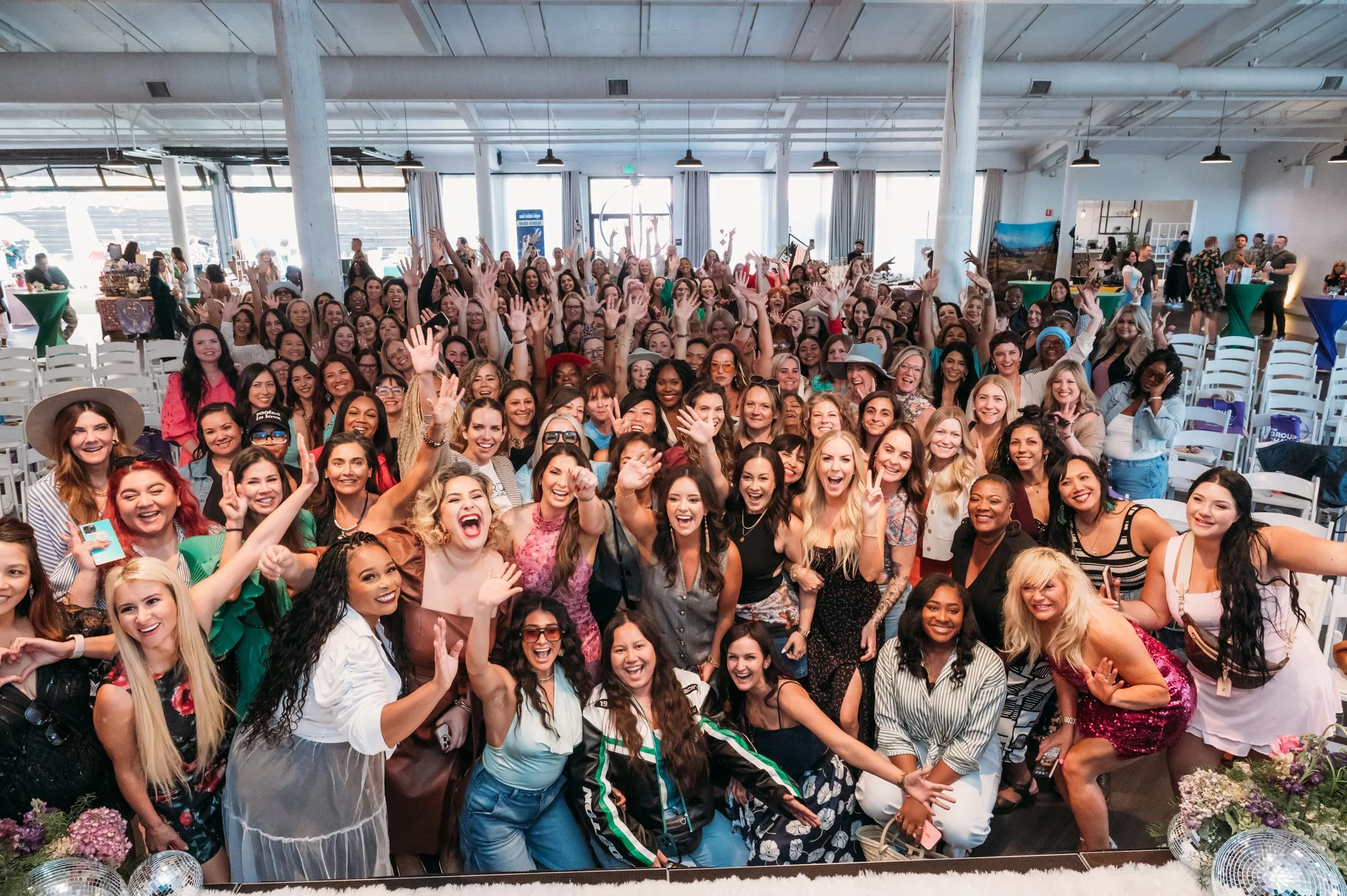
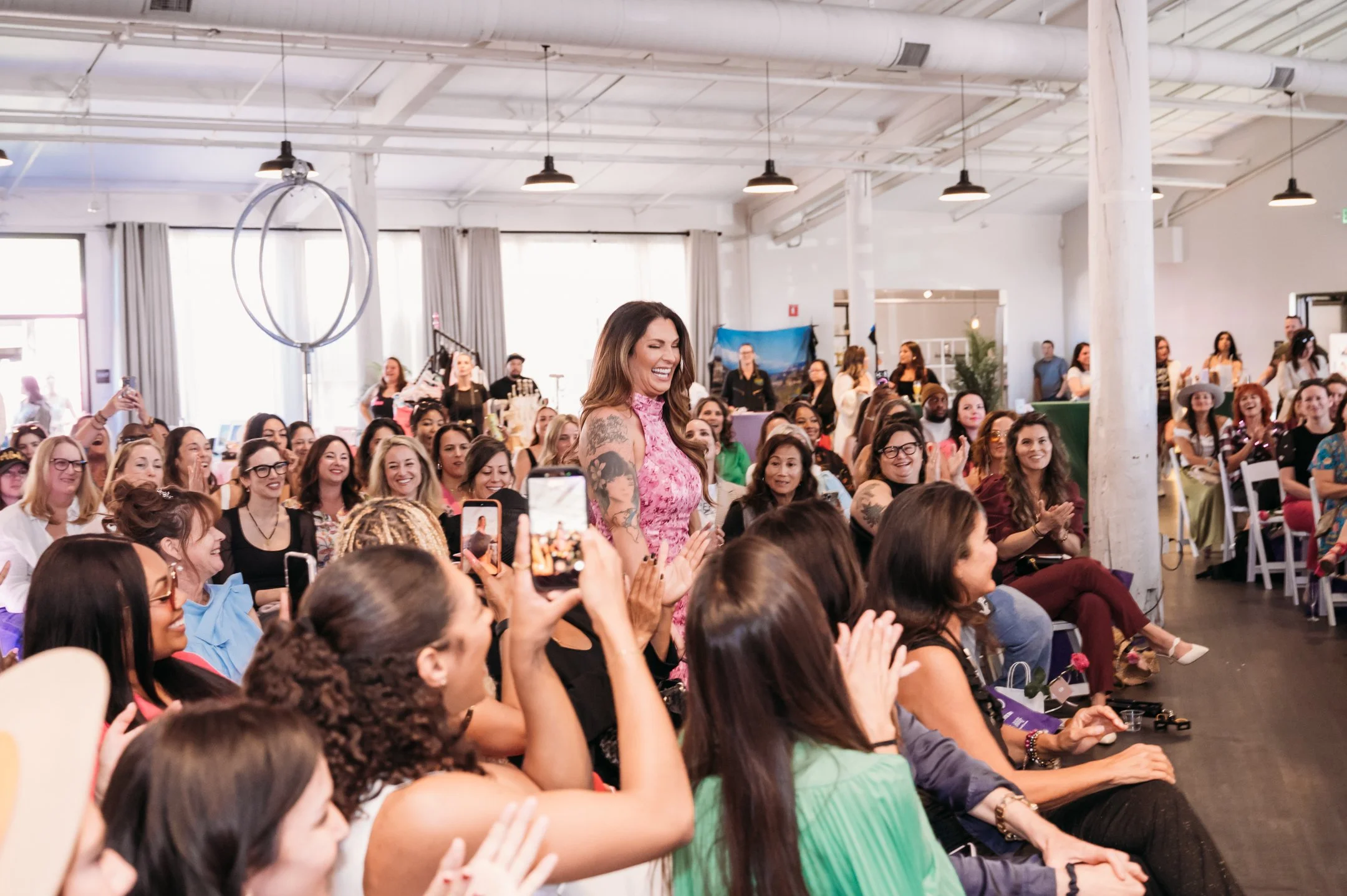
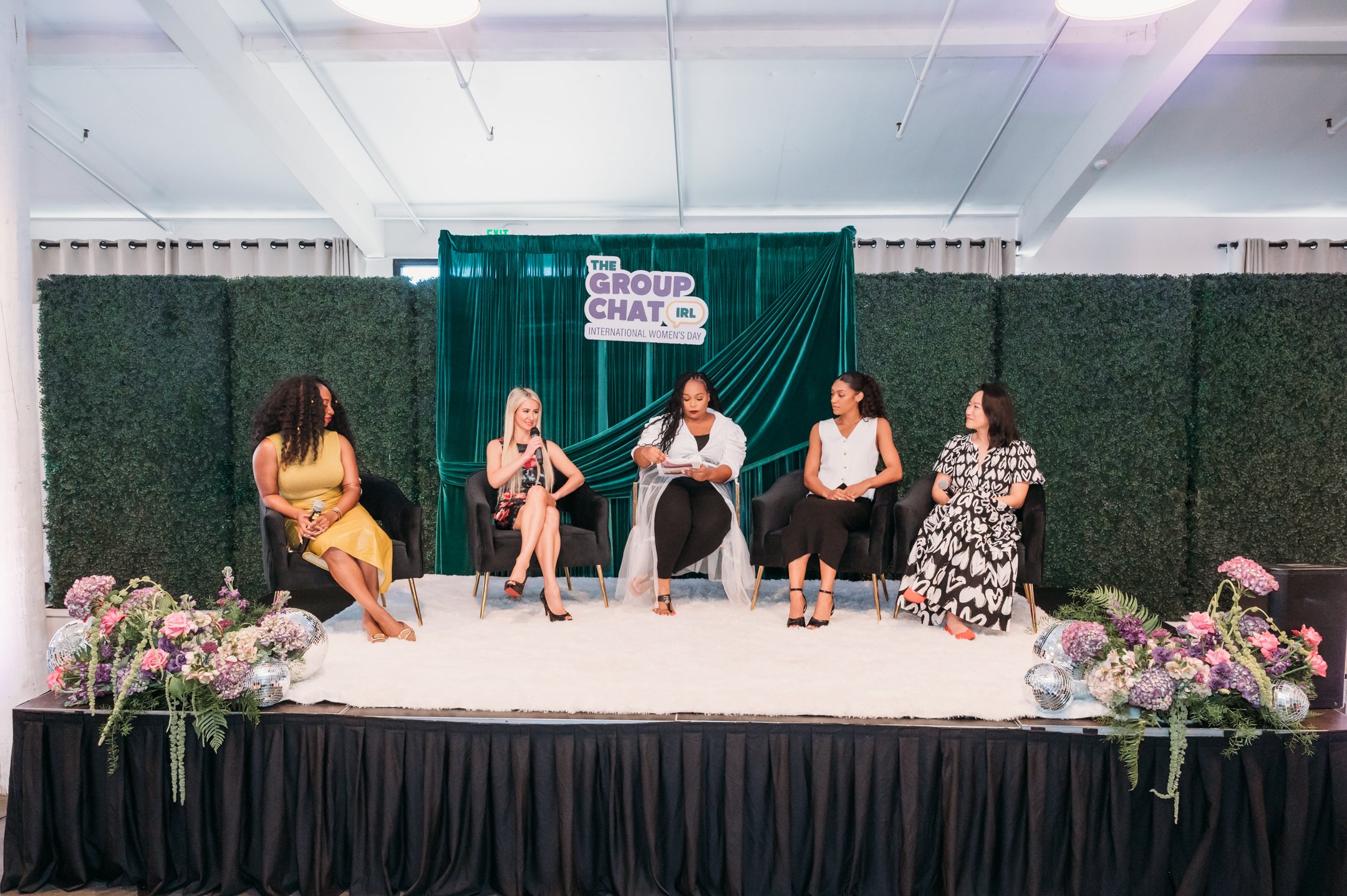
That's where I found myself at the start of this year, gearing up for the second annual Bizz Bitch International Women's Day event — San Diego's largest women's gathering, 300+ women, 30+ women-owned vendors, 25 community leaders, one stage, one shared mission — and genuinely wondering if I should just... not.
This post is about that. It's about what it actually takes to build something big as a woman entrepreneur. About the real event strategy that filled the room twice in a row. About the systems I put in place so I didn't completely lose my mind doing it. And honestly? It's about what happens in your brain when success doesn't automatically create confidence.
Because no one talks about that part enough.
The Room That Changed My Life (Before I Had a Business to Put It In)
Let me take you back.
I was 25, living in Sydney, Australia, working in hotel sales for Marriott. Saying yes to every networking event that crossed my desk — partly because I loved people, partly because it got me out of the office, and partly because I had this restless, unnamed feeling that I couldn't quite shake.
Someone passed me an invitation to an International Women's Day breakfast. I pictured fifty women, some light networking, a speaker, mediocre coffee. I figured I'd be back at my desk by noon.
I walked into a ballroom with close to a thousand women.
At breakfast time.
Women in colorful dresses and their most fashionable outfits — not a corporate blazer in sight — drinking champagne before 9am, laughing, networking like they already knew each other, celebrating like it was the most important day of their lives. Because for them, it was.
I remember the feeling in my body when I walked in. Full chills. Jaw somewhere near the floor. And this thought — crystal clear, almost embarrassingly obvious — that moved through me like electricity:
I have to do something like this with the rest of my life.
Not "this would be fun sometime." Not a Pinterest-board fantasy or a vague five-year plan. A full-body, non-negotiable knowing. The kind you can't logic your way out of.
I left that event and went straight to the website of the company who hosted it — Business Chicks, one of Australia's most iconic women's business communities — and applied to every job that fit my experience. And some that definitely didn't. I also applied to volunteer. I did what you do when you find the thing: I chased it.
A few months later, I got my first interview. And I went on to work with them in a partnerships capacity for a few years — surrounded by women in leadership, led by a CEO who knew my name and believed in me before I believed in myself, part of a scrappy team doing enormous impact.
That time in Australia gave me a lot of things. Real friendships. A city I still love. And, if I'm being honest, a boyfriend who was a complete waste of time — but we don't need to dwell on that.
What it gave me most was a vision. A proof of concept. Living, breathing evidence that the kind of community I wanted to build was possible. That women would show up for each other at that scale. That the room I'd felt in my body that morning could be created on purpose.
And then I moved back to San Diego, and I sat on that dream for years.
→ Want to hear the full story? Listen to the Bizz Bitch Podcast episode this post is based on.
What Happens When You Finally Go For It — And Then Have to Go For It Again
When I officially launched the Bizz Bitch community, something clicked into place. I finally had a container for the vision I'd been carrying since that morning in Sydney. So in January, about six weeks before March 8th, I did something a little unhinged.
I decided to put on San Diego's largest International Women's Day event.
In six weeks. With no real budget. And mostly on belief.
I called three women who I knew shared my values and my hunger. I told them what I wanted to build. I didn't have the venue locked. I didn't have sponsors confirmed. I didn't have a fully formed plan. I had a vision, a deadline, and a deep, almost irrational certainty that this needed to exist.
They said yes.
That first year was bootstrapped, scrappy, and absolutely magical. We broke even. We donated the surplus to nonprofits aligned with our mission. Nothing catastrophically wrong happened. The women in that room felt exactly what I'd hoped they'd feel — seen, celebrated, energized, electric.
By every measure, it worked.
And yet, when January of the following year rolled around and it was time to do it again, I almost didn't.
The Self-Doubt That Nobody Warns You About
Here's what nobody tells you about imposter syndrome.
It doesn't always ambush you before the first attempt. Sometimes it saves itself. Waits. Lets you succeed once, lets you exhale, and then shows up right when you're about to repeat yourself — right when you're supposed to know better. Right when the evidence of your own capability is sitting in front of you, undeniable.
That's when it strikes.
I would go on walks and just think: can I do this again? I'd watch the videos from year one. I'd read the messages from women who said that event changed something for them. I'd look at all of it — the proof, the testimonials, the photos — and still find a way to feel like this time would be different. This time, it would fall apart. This time, nobody would show up. This time, I wouldn't be able to recreate the feeling in that room.
When I finally sat with it — really sat with it, journaled through it — I realized what was actually happening.
It wasn't that I didn't believe in the event. It was that I didn't fully trust myself to deserve the repeat. To be someone who gets to build something beautiful and then do it again, bigger.
Sound familiar?
This is what I see inside the Bizz Bitch community constantly. We are extraordinary at launching. We are wired for the creative rush of new. The first course, the first offer, the first event, the first membership cohort — there's a magic to it that feels electric.
But the real work of building a sustainable business isn't in the first attempt. It's in the second. The third. The rinse-and-repeat that feels less sexy and more like discipline. It's in looking at the thing you already built — the thing that worked — and saying: I'm going to do this again, and I'm going to do it better, even when my brain is screaming at me to walk away.
Running a real business means reselling the same offer, the same service, the same experience — over and over, with refinement. That's not boring. That is how you build something that lasts.
The pressure almost broke me. Instead, I leaned in.
And year two was, without question, the best thing I've ever produced.
→ Feeling this? The Bizz Bitch Membership is where women entrepreneurs work through exactly this — together.
What the Women in the Room Said
The Strategy Behind Filling a 300-Person Room — Twice
Okay. Let's get into the actual mechanics, because belief alone doesn't sell tickets and good vibes alone don't fill a room.
Here's the framework I used and what I'd recommend to any woman entrepreneur building events as part of her community or membership growth strategy.
1. Don't Build the Event Alone — Co-Create It from Day One
Memberships are not passive.
There's a version of this where you build the whole concept yourself, and then go ask people with aligned audiences to post about it and hope for the best. That works. Sort of.
But there's a better version.
Find people with aligned audiences, aligned missions, and aligned values — and bring them in at the beginning. Not as affiliates. Not as promotional partners. As co-creators.
When someone has a hand in shaping the event when their ideas are woven into the experience, when their community members are in the room, when their name and brand are genuinely part of the day — they show up differently. They promote differently. They care differently. Because it's partly theirs.
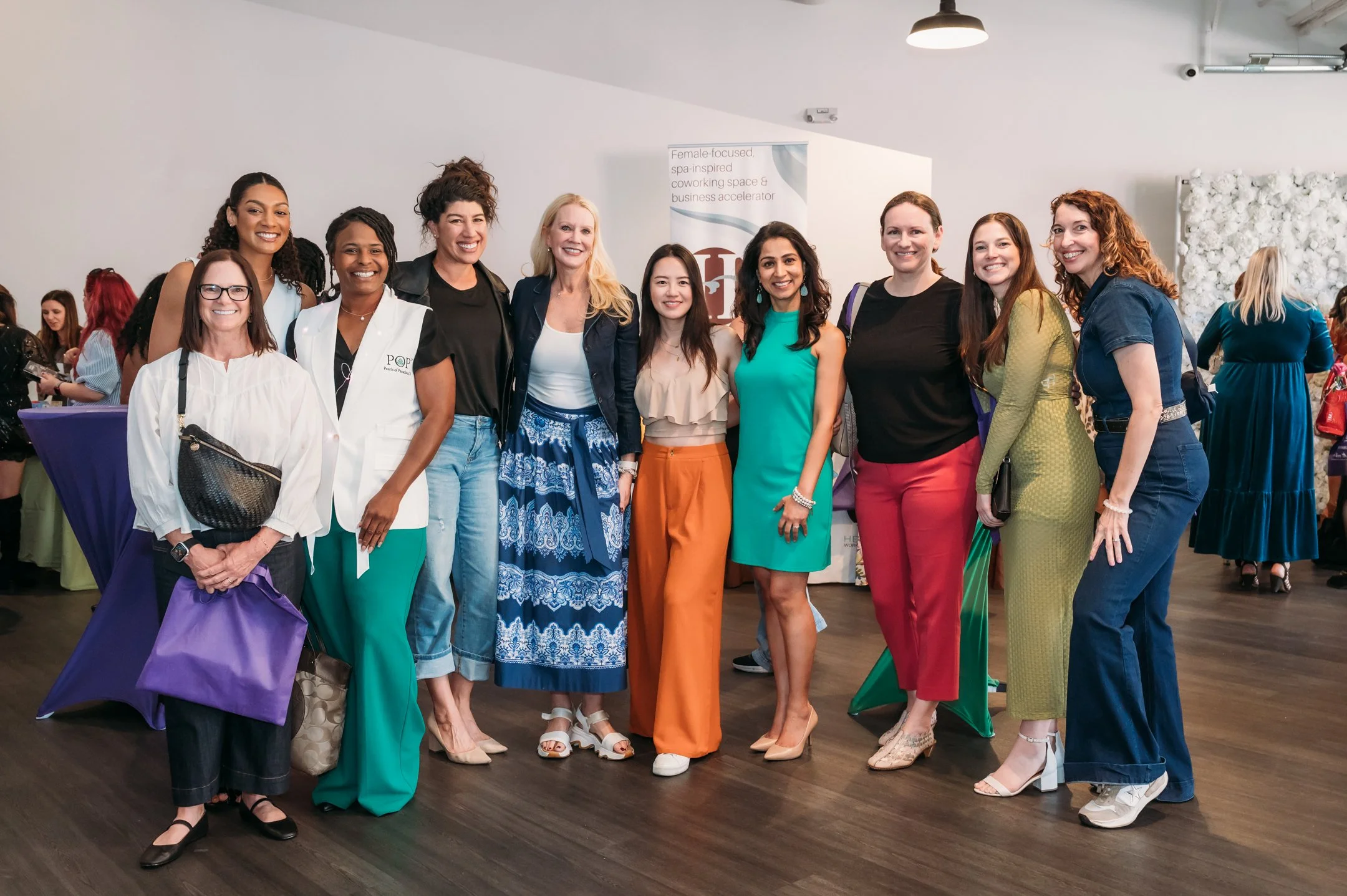
For Bizz Bitch IWD, I brought in community leaders who run women's memberships in San Diego. By traditional business logic, they are my competitors. I call them my allies. We have overlapping audiences, overlapping missions, overlapping values — and instead of each of us throwing a separate event for our 20 members, we built one event for 300 women combined.
Every single one of us got more out of it than we ever would have alone.
Stop protecting your turf. Start building your table.
2. Know What Currency You're Actually Building With
Not every event needs to turn a profit to generate real value. And this is a mindset shift that I think holds so many entrepreneurs back from running events consistently.
They host one event, it doesn't turn a big profit, they call it a failure and never do it again. But they're measuring with the wrong ruler.
For Bizz Bitch IWD, my goals were never primarily revenue. They were:
Brand authority — getting eyes on what I do and positioning me as a leader in the San Diego women's entrepreneur space
Community experience — giving my members and the broader community something they'll remember for years
Visibility — creating a real platform for women-owned vendors, speakers, and sponsors who then become advocates
Donation impact — any surplus went directly to nonprofits aligned with our mission
Revenue matters. I'm not telling you to run charity events forever. But when you go in knowing exactly what you're building toward — and it's more than just a ticket sales number — your decisions get sharper, your negotiations get smarter, and your tolerance for the inevitable chaos becomes a feature, not a bug.
Know your currency before you build the budget.
3. Partner with Adjacent Communities Who Want to Add Value Without Adding WorkFree communities are easy to fill.
Beyond the core co-creators, I reached out to chambers of commerce and traditional networking organizations whose members would genuinely benefit from the event. Not as major collaborators as smart distribution channels.
The pitch was simple: You don't have to add another event to your calendar. Co-brand with us, offer your members a discounted ticket, and they feel celebrated by you.
Communities and membership organizations are stretched. Their leaders are busy. Giving them a way to add meaningful value to their members without adding to their own production load is genuinely useful. And it fills seats in a way that organic social alone never will.
4.Build the Automations Before You Sell the First Ticket
This is where my systems brain takes over and I'm not apologizing for it.
When I set up the event on Luma (far superior to Eventbrite for this kind of work — more flexible, more brandable, less clunky, and I will die on this hill), I put three things in place before a single ticket was sold:
The branded confirmation email. Not the generic platform template. Something warm, specific, and on-brand that made attendees feel like they'd already arrived even weeks before the event.
All ticket tiers and price-increase dates, loaded from day one. Urgency shouldn't be manufactured last minute. When someone can see that the price goes up in two weeks, they make a decision now. Build the urgency into the architecture from the start — don't scramble to create it later.
The automated post-event experience email. This goes out the moment the event ends, with a rating system and a testimonial prompt. Why does this matter? Because the day after a big event, I am on my couch in pajamas with a glass of something, and the last thing I'm doing is chasing Google reviews. That email was already flying without me.
For sponsorships, I built a lead page inside HoneyBook that functioned as a branded media kit — rich with data about the women in the room, photos from year one, sponsorship tier breakdowns, and a direct payment link at the bottom. Click, pay, get an automated invoice and confirmation. No chasing. No manual follow-up. Done.
Systems don't take the soul out of events. They protect your soul during them.
→ Building the systems foundation your business actually needs? That's exactly what we work on together.
5. Protect Yourself — Because Nobody Else Is Going to Do It for You
Nobody romanticizes the liability waiver. I know. But when you're hosting 300 women in a room, here's the reality:
Event liability insurance. Non-negotiable. Even for a 50-person workshop. All it takes is one person tripping on their way in, one dispute, one disgruntled attendee with a lawyer in the family. Get the insurance.
Liability waivers at the door. Simple, templated, legally reviewed. Every person entering signs away liability. Every. Person.
Certificate of insurance pulled for the venue — even if they don't require it. Pull it anyway.
Contracts with every vendor. Even if it's just a checkbox at the bottom of their application form confirming terms. Simple. Done.
A security guard on site. Yes, it's an added cost. Yes, it's worth it. Especially for a public-facing event of this size and this nature.
And the one that surprised people: every single person in that room — vendor, sponsor, attendee, volunteer — was registered through Luma. Even the freebies got a discount code. Why? Because if something had happened — an emergency, a fire, anything — we had one database, one communication channel, one place to reach every single person in that building at once.
That's not paranoia. That's protection. And as a woman building a business you want to last, protection is part of the foundation.
6. Hire a Day-Of Operations Team. I'm Serious. Just Do It.
Year one, I was everywhere. Planning, managing, hosting, greeting, smiling, sweating, panicking quietly in the hallway.
Year two, I hired a day-of operations team.
It was the single best investment I made for the entire event.
Because here's what actually happened on event day: our stage arrived missing half its legs. The driver's truck broke down on the way to get the replacement legs. I ended up lending him my car so he could drive to his warehouse — twice, because the first set he came back with were the wrong size. Our stage wasn't fully built until about 10 minutes before doors opened.
Our MC — the extraordinary Chef Claudia Sandoval, MasterChef winner, Chopped judge, absolute legend — was stuck in Tijuana traffic with spotty cell service and walked in at exactly the time she was supposed to walk on stage.
The operations team handled all of it. Calmly. Without breaking the event's energy for a single woman in that room.
And I got to be present. I got to give my speech. I got to hug people. I got to feel the room I'd been building for two months.
You cannot put a price on that. But even for a 50-person event — pay your best friend, pay a college intern, pay somebody to be the person who carries the stress so you don't have to. It changes everything.
The Part That Lives in Your Chest Long After the Lights Go Down
Here's what I want you to know, if you've made it this far.
The high from that room lasts for months. I'm not exaggerating. There is something about watching 300 women come alive together — sharing stories, laughing, crying a little, finding each other — that does something irreversible to you as the person who made it happen.
And then it goes away. And you're left in the quiet, wondering if you can do it again.
That emptiness isn't failure. It's not a sign to stop. It's actually evidence that what you built mattered. You don't crash from things that didn't mean anything.
The crash means it was real.
There's also something I want to name that nobody talks about enough: when you run events, retreats, or high-impact community experiences — there is a very real emotional low that follows. It can feel disorienting. Hollow. Like you just gave everything you had and now there's nothing left. I'd liken it to the day after your wedding if I had any plans of having one, which I don't — so I'll just call it what it is. A grief-shaped thing, even when everything went beautifully.
Know that it's coming. Let it move through you. And then book the next one.
A Mini Reflection — For the Woman Who's Mid-Build and Second-Guessing Everything
If you're in the middle of something right now a membership, an event series, a coaching offer, a community and you're feeling the wobble of can I do this again? do I deserve to? will it be as good? I want you to sit with these three questions.
Not answer them immediately. Sit with them.
1. What evidence do I actually have that I can't do this again? Not the fear. Not the story. The actual evidence. Write it down. Watch how little there is.
2. Am I avoiding the repeat because of real risk — or because success felt vulnerable and I'm scared to need it again? There's a difference between a rational pivot and an emotional retreat. Be honest about which one you're in.
3. What would I tell a client in this exact position? We give the best advice to other people that we refuse to take for ourselves. Close that gap.
3 Journal Prompts to Work Through the Mid-Build Wobble
Pull out a notebook. Not your phone. An actual notebook. Give yourself 10 uninterrupted minutes with these.
Prompt 1: "I'm afraid to do this again because ________. And if I'm really honest, that fear is actually about ________."
Start with the surface answer. Let it lead you to the real thing underneath it.
Prompt 2:"The version of me who already knows she's capable — what is she doing right now? What has she stopped waiting for?"
This one is uncomfortable. Write it anyway.
Prompt 3: "What would I have to believe about myself to show up fully in the next phase of this build — without proof, without permission, without guarantees?"
Entrepreneurship doesn't come with guarantees. The women who scale aren't the ones who wait for certainty. They're the ones who decide first and figure it out on the way.
What Women in the Bizz Bitch Community Are Building
You Don't Have to Figure Out the Next Phase Alone
Here's where I'm going to be straight with you.
The mid-build wobble — the second-guessing, the self-doubt that shows up after your first win, the paralysis that sneaks in right when you're supposed to be scaling — that's not purely a mindset problem you can journal your way out of alone.
It's a strategy problem wrapped in an identity problem. And it needs both addressed at the same time.
That's exactly what the Power Goal Strategy Session is built for.
It's not a discovery call. It's not a soft pitch dressed up in coaching language. It's a real working session — 60 minutes where we look at where you are right now, what you've already built, where the gaps in your systems and foundations actually are, and what your clearest next move is.
No fluff. No homework you'll never actually do. No motivation without a map.
I open a limited number of spots each month — because this work is real, and real work takes real time. If you've been sitting on something that worked — an offer, an event, a membership, a service — and you're somehow convincing yourself you can't go bigger or do it again, this is where we start.
→ Book your Power Goal Strategy Session — spots are limited
Because your second year — your second launch, your second event, your second offer — doesn't have to feel like starting over.
It just has to feel like you.
Frequently Asked Questions
These FAQ answers are also optimized to capture Google featured snippets for long-tail search traffic.
How do I fill seats at a women's event when I'm just starting out?
The fastest way to fill seats when you're early in building your audience is to stop trying to do it alone. Co-create the event with two to four other community leaders or business owners who have aligned audiences and shared values. When multiple people are invested in the event's success — not just promoting it, but actually part of building it — promotion becomes collective and organic. Additionally, reaching out to chambers of commerce or established networking organizations and offering their members discounted co-branded access is a smart way to tap into existing audiences without starting from zero. Pair that with tiered pricing that goes up at specific dates (built into your ticketing platform from day one) and you'll create genuine urgency without manufactured pressure.
Do I need to make money from every event I host in my business?
Not necessarily — and this is one of the most important mindset shifts for women entrepreneurs who host events as part of their community or membership strategy. Not every event needs to be a profit center. Some events function as brand authority builders, community experience investments, or visibility platforms. The key is knowing before you build the budget what currency you're actually creating. If the goal is brand positioning, community loyalty, and organic word-of-mouth — and you break even or donate the surplus — that can be a more powerful business decision than chasing a profit margin on every ticket. What matters is that you're intentional about the goal going in, not discovering what it was supposed to be after the fact.
What systems do I need to host a large-scale event without burning out?
Three non-negotiables: an automated confirmation email sequence built into your ticketing platform before you go live, a post-event testimonial email scheduled to send automatically the moment the event closes, and a real day-of operations team (even one additional person) so that you, as the founder, can actually be present at the event you built. Beyond that: a running budget spreadsheet from day one, a single centralized platform where every attendee and vendor is registered (for risk management and mass communication), and a sponsorship collection system that doesn't require you to manually chase invoices. Systems don't drain the humanity from your events. They protect it.
Jazmin is the founder of the Bizz Bitch community and private membership, host of the Bizz Bitch Podcast, and a hybrid business strategist specializing in systems, foundations, and mindset for women entrepreneurs. She helps founders under $150K build the operational backbone — and the mental muscle — to grow further without burning out or doing it alone.
→ Join the Bizz Bitch Membership → Listen to the Bizz Bitch Podcast → Book a Power Goal Strategy Session